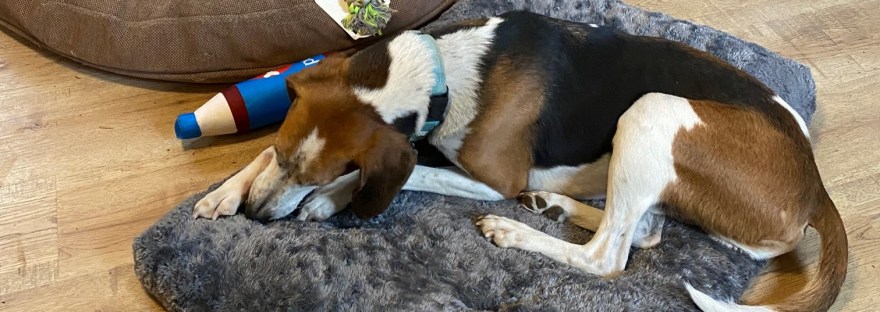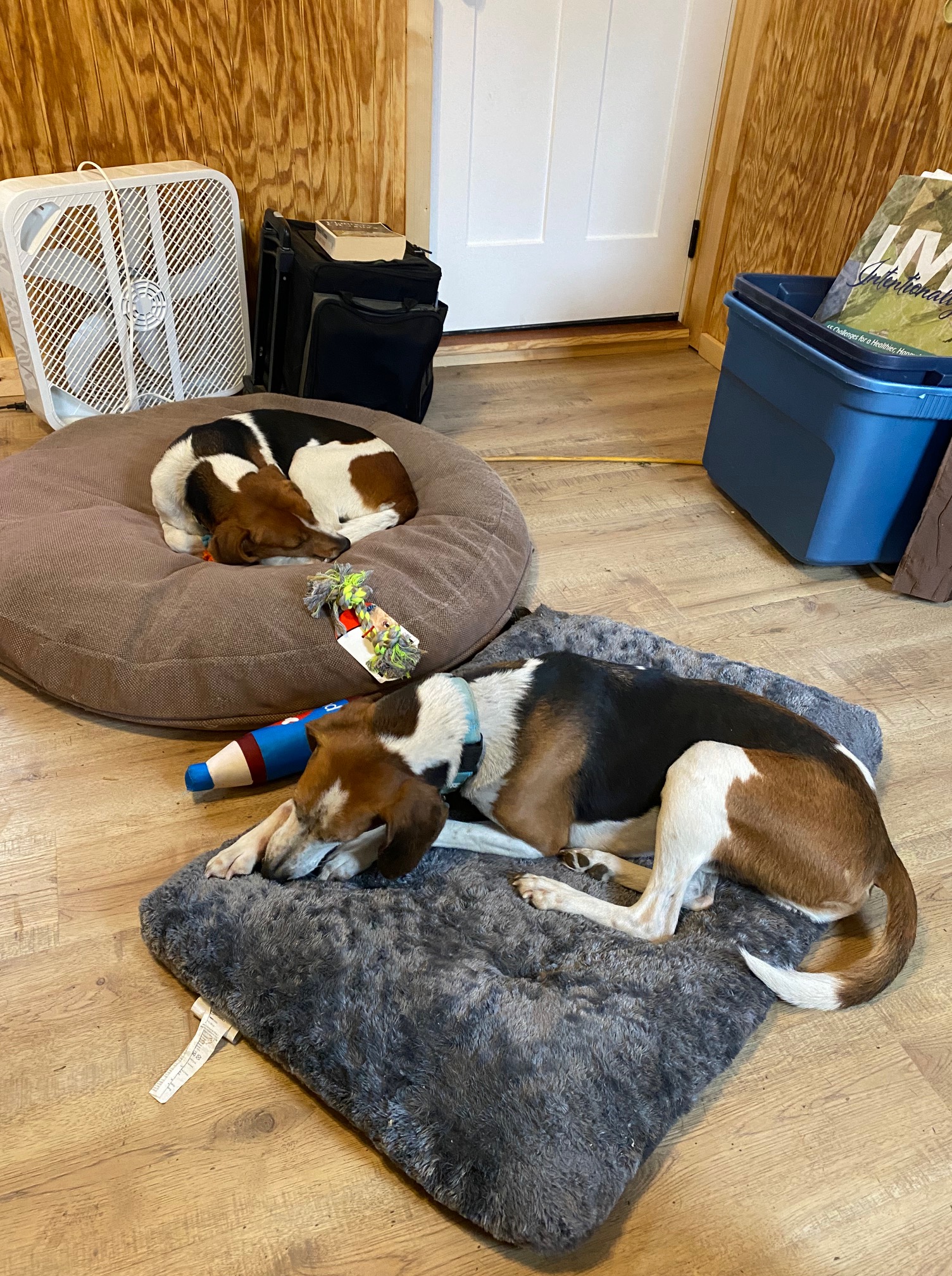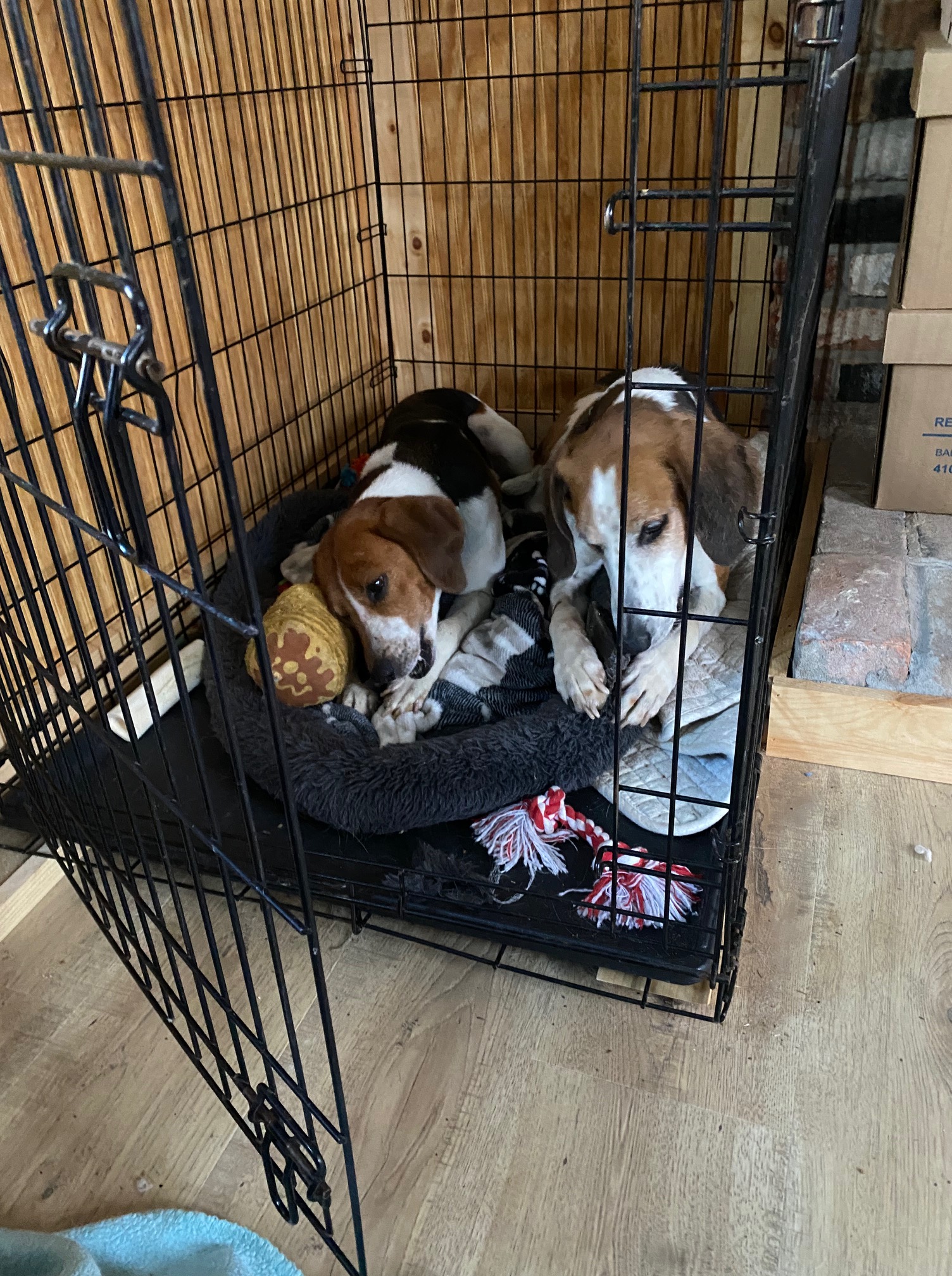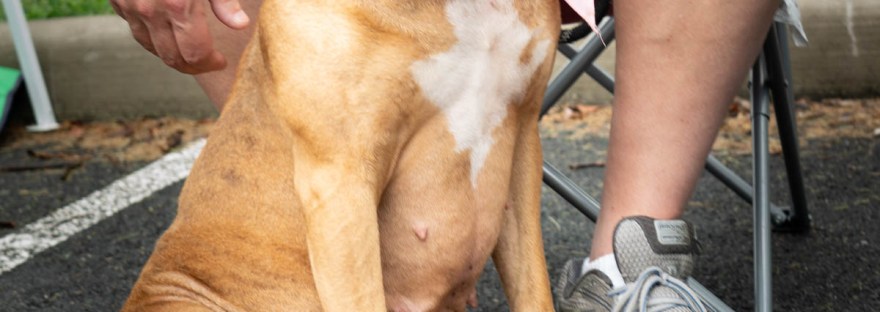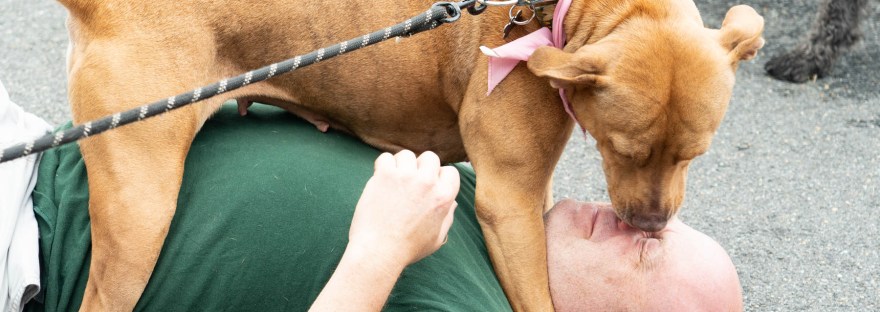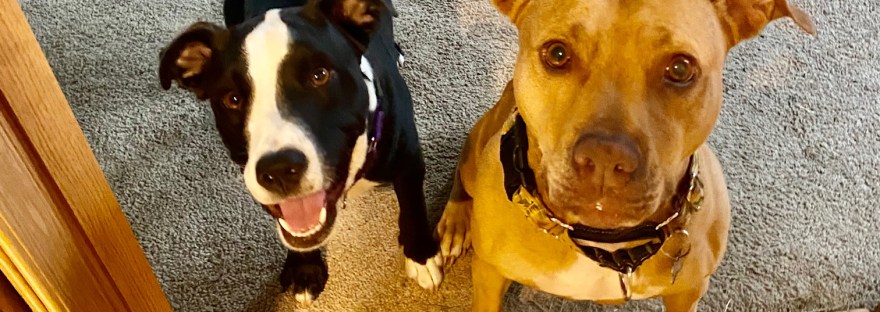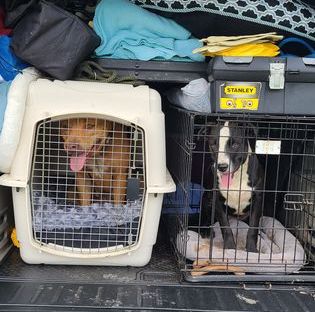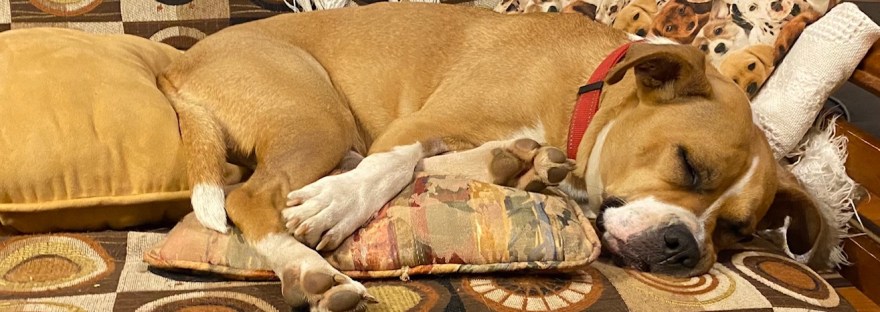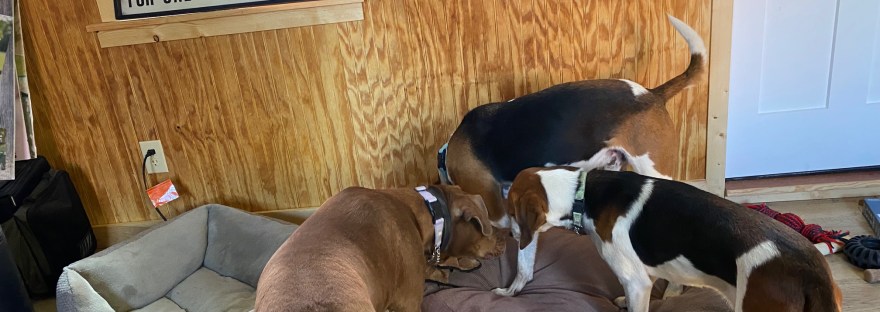
We are currently fostering Ladybug and Rufus, two sweet hound dogs who were abandoned on a farm and ultimately rescued by the Humane Society of Shenandoah County.
Rufus Goofus and Ladybug are an adorable pair together but available to be adopted separately.
After three weeks with Moose, I’ve learned a few things about our big boy (who lost five pounds and is now only 87 pounds!).
Moose has no idea that he is enormous. He never uses his muscle or size to break in or out of places. Initially, we put him in our ‘tiger crate’, the giant steel dog crate we purchased after a previous foster broke out of (and in the processed destroyed) two large wire crates.
Moose wasn’t crate-trained when he arrived, so it seemed like the safest place to put him, knowing that at 92 pounds, he could easily force the wire crate open if he wanted to. This week I transitioned him into a regular crate and he’s never challenged it, even when left alone overnight.
I’ve tried. Hard. For the sake of my family and our new home and the holidays and my husband’s patience.
I’ve tried not to foster.
The plan we made (and I agreed on) was once we were settled in our new house, put up a dog fence, and renovated the cottage, then I would start fostering again.
She’s no longer living on a chain (yay), but she is confined to one room much of her day. She can see the other dogs, hang out with our foster cat, and watch the activity out her window, but she’d much prefer to be with a person.
Abby is a people-dog. She loves people – all kinds, all sizes, all attitudes. She isn’t discouraged by her predicament, but I am.
I can’t help but think that if my two foster pups were scruffy or curly or smaller or younger, or this was a year ago, they’d be snapped up by now. Instead, these two housebroken, crate-trained, people-friendly, lovely-on-a-leash dogs are spending long lonely days in their crates in my future foster cottage.
Often when you first bring home a new foster dog (or two), the dog is still stunned by its new situation, maybe feeling queasy from the recent dewormings and vaccinations, so they are not themselves. It’s a mistake to assume that the compliant, easy-to-deal-with dogs you first bring home will still be that way a week or two into their stay with you.
I’ve fostered over 200 dogs now, and am wary of that honeymoon period. So, I’ve been holding my breath, wondering if Abby and Bonnie (A&B) who had been so quiet and easy their first week with me, would continue to be once they got comfortable with their surroundings…..
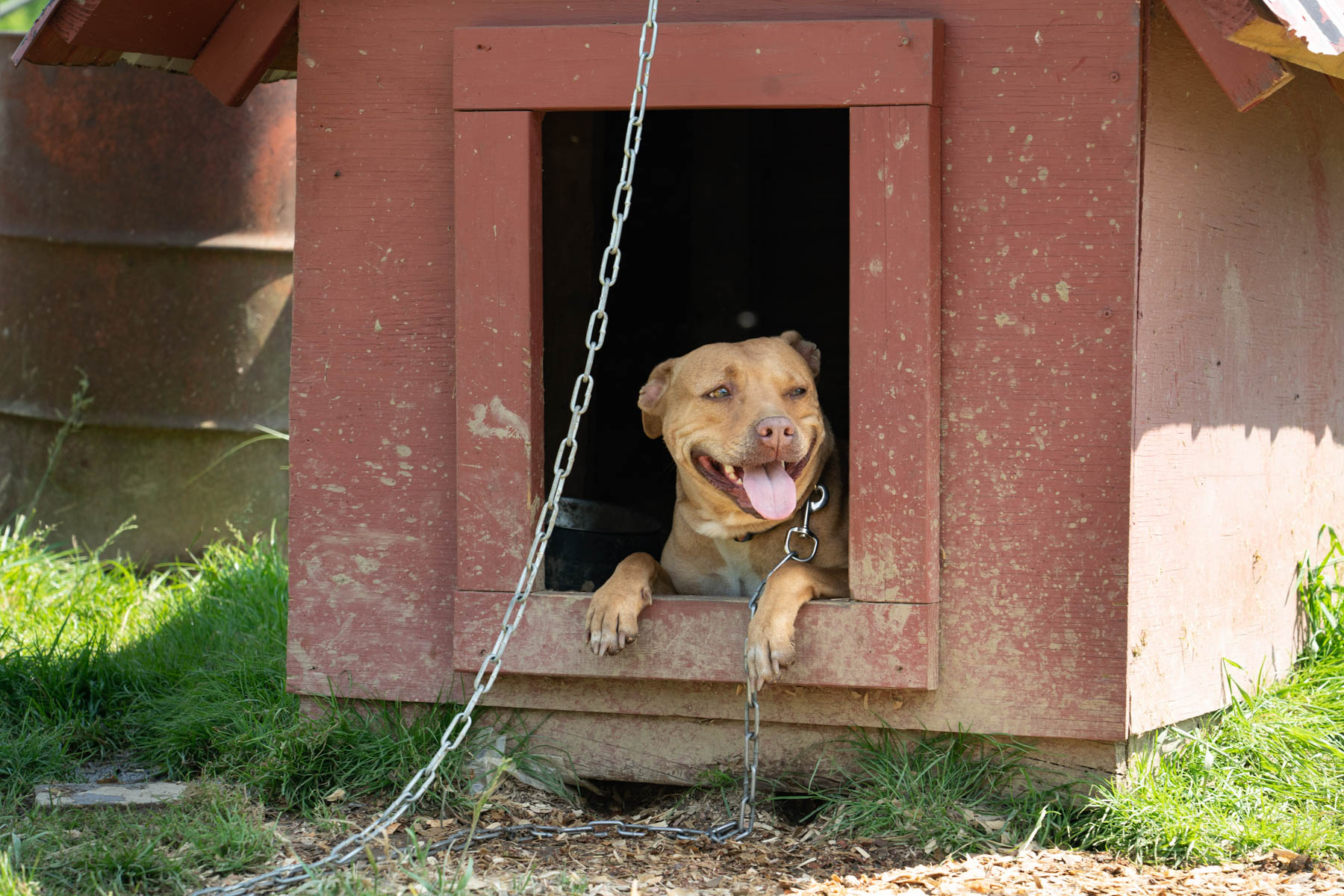
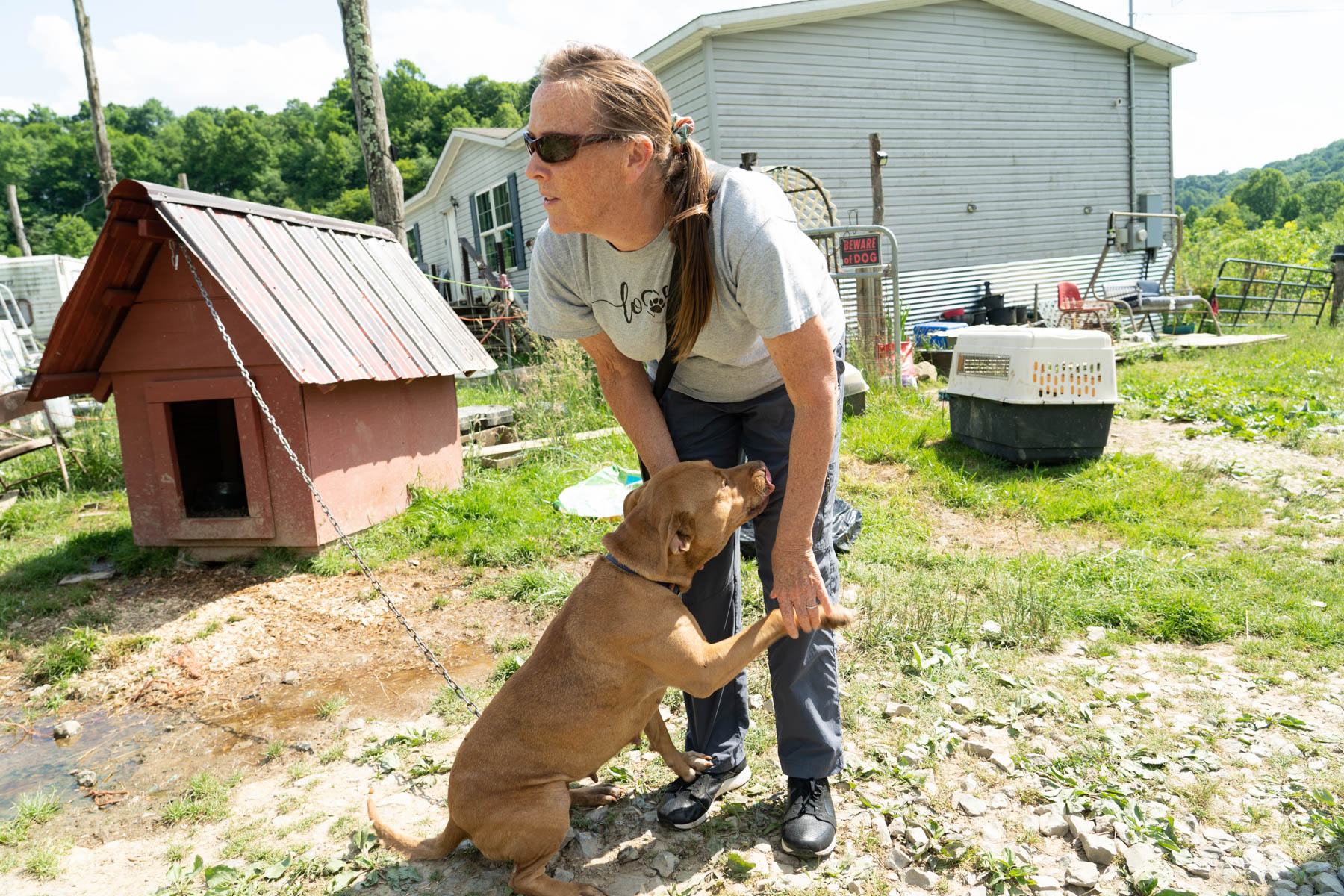
It was clear that Abby was ready for a new life. I met her two months ago, living on chain tied to a dog house in the hot sun in Cowen, West Virginia. She’d been saved from euthanasia at the local dog pound, but life laying in the mud, chained to her house, made me ponder the word ‘saved.’
When I returned last week, Abby was still there, chained to the dog house. Still greeting every person who approached with joy, her tail wagging, leaning in with pleading eyes that said, ‘love me.’ This time, I had made arrangements to pull her for the Humane Society of Shenandoah County and bring her home to foster.
Melissa Chan wrote in an article for Time magazine last week, “a surge in pandemic pet adoptions offers opportunities for criminals to seize on nationwide demand and shelter shortages…”
People are so desperate for French bulldogs, one small private investigator in Nebraska who specializes in missing pets says calls have increased 60-70% in the past 18 months, averaging 3-5 requests a week.
Reading the article, I could only shake my head. It seemed to me Chan was writing about another world altogether. It wasn’t the news that so many pets are being stolen—that is individually tragic—but it was how she so breezily tossed off the phrase, shelter shortages, as if it were fact.
Smart dogs are just harder to deal with—same goes for smart children. Mia still has no applications, but that’s not her fault. She isn’t a simple dog.
She is clever and energetic and totally in the game. She doesn’t miss a thing—my glance her way while working will bring her to her feet, she’ll nudge my hip as if to ask, “How can I help?”